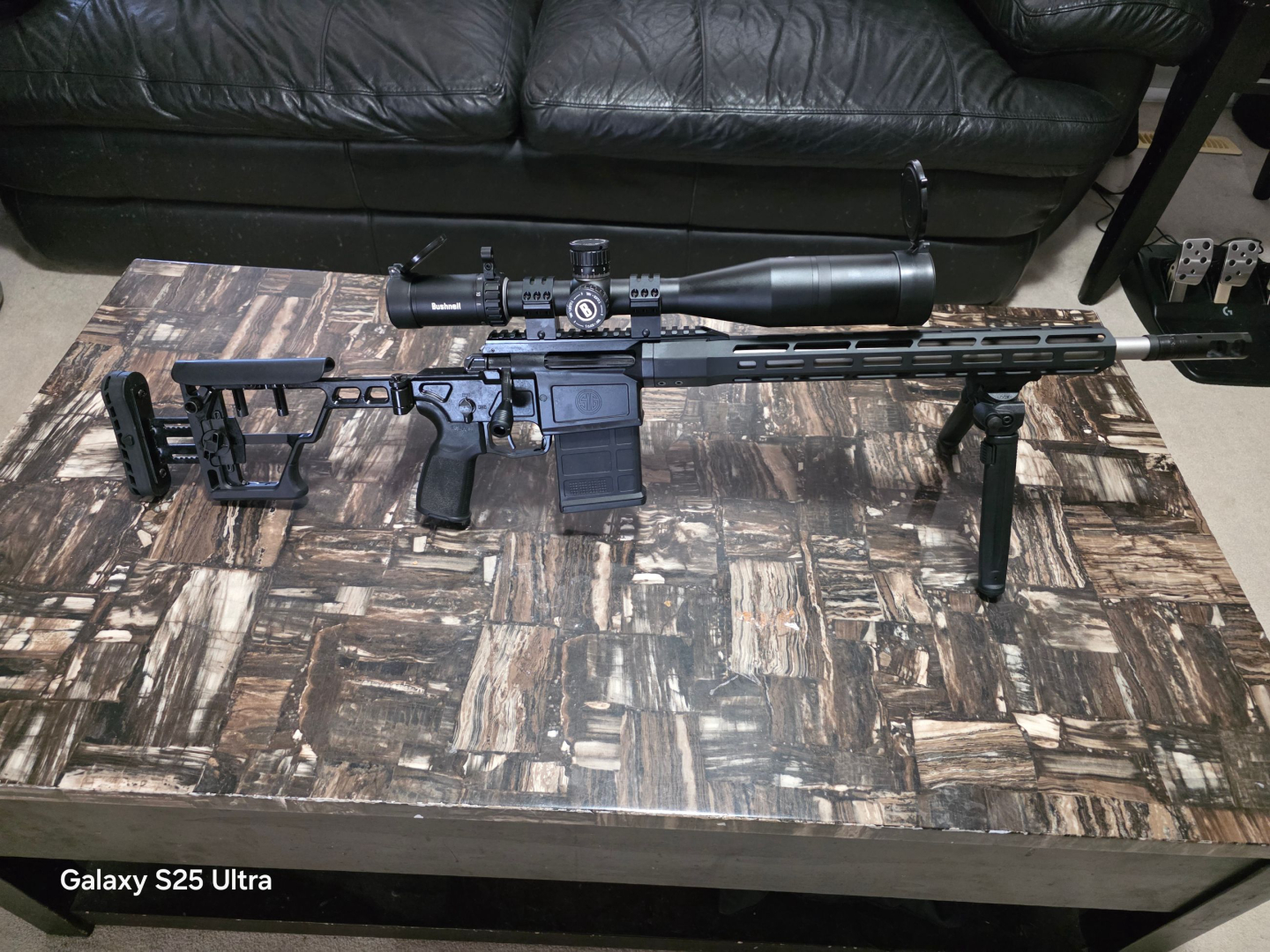
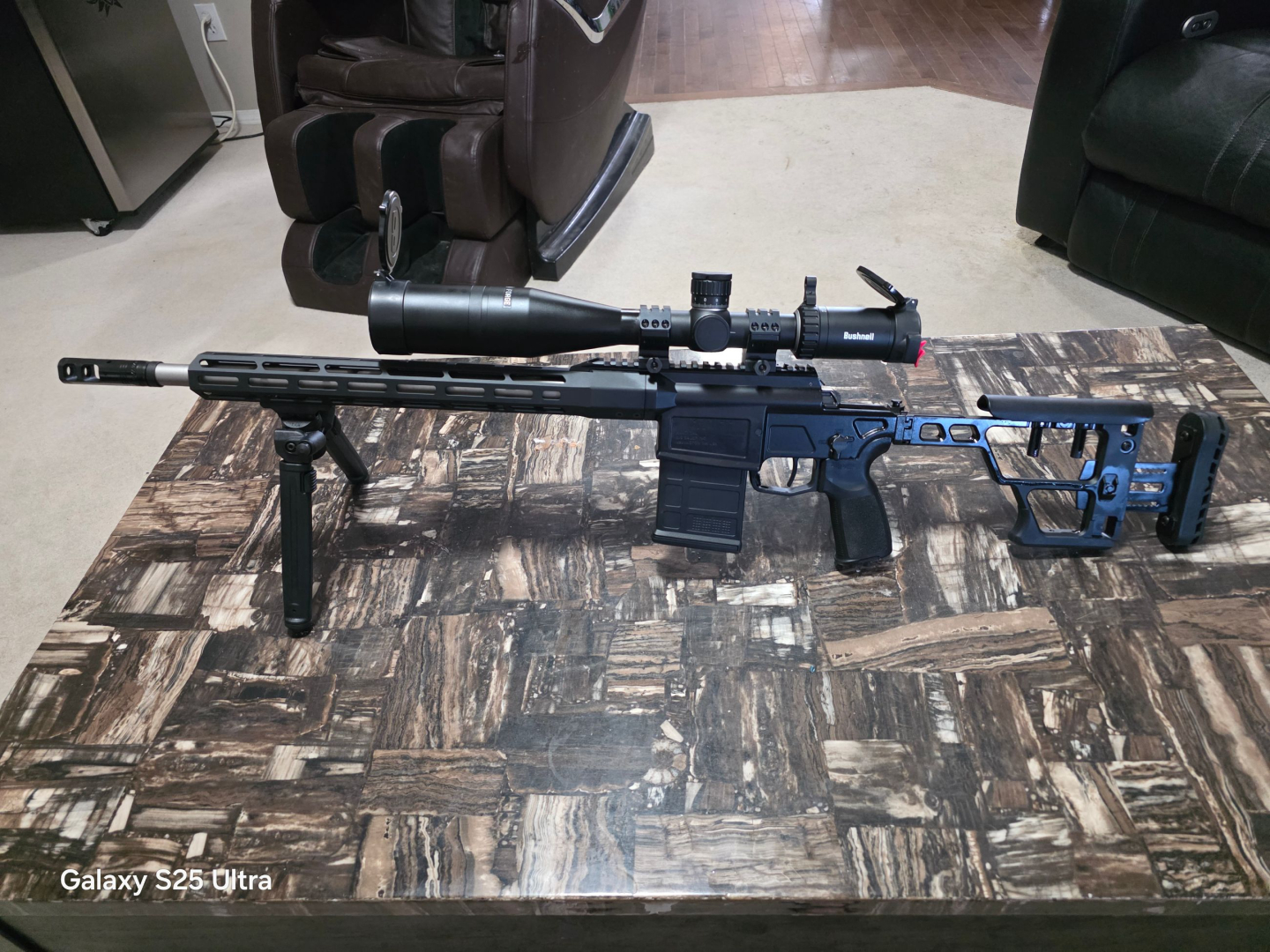
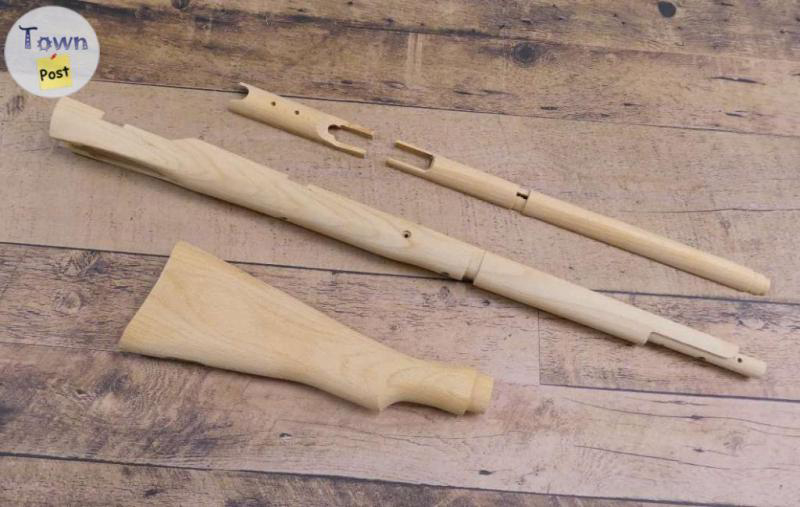
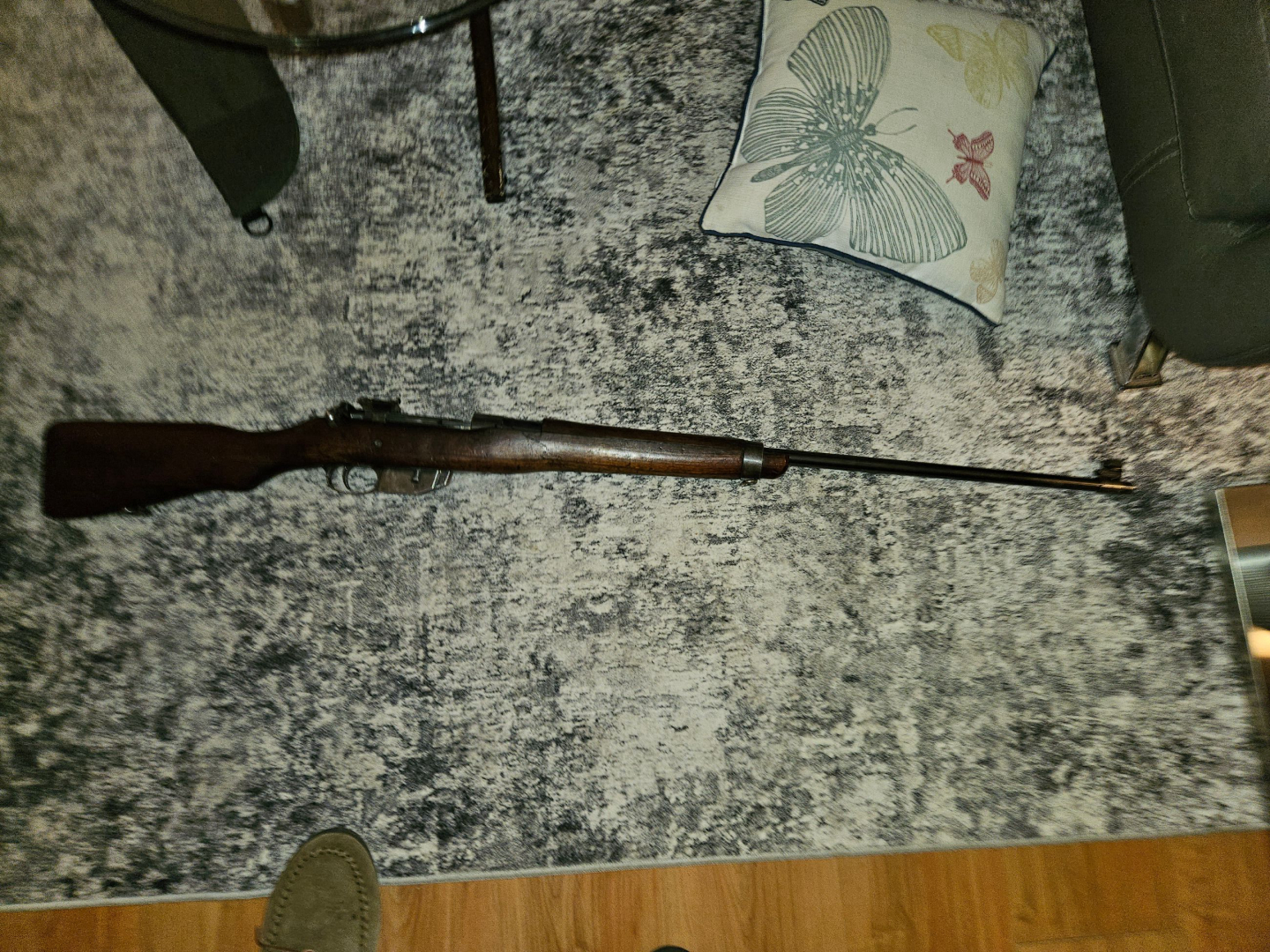
Photo of Charleville French Infantry Musket Model 1728 - ExpoAntique (Replica)
$795
Charleville French Infantry Musket Model 1728 - ExpoAntique (Replica)
French Infantry Musket Model 1728 An exceptional historical piece! Treat yourself to an authentic piece of French military history with this Model 1728 infantry musket, emblematic of the armies of the 18th century. This model succeeded the 1717 model and is distinguished by its three muzzle rings that securely hold its 46 ¾-inch barrel. Its elegant stock, with its famous “cow's foot” shape, reflects the refinement of French weapons of the period. Main features: • Model: French Infantry 1728 • Barrel length: 46 ¾ inches • Fastening: Three ramrods • Stock: “Cow's foot” shape • Period: Early 18th century • Condition: Excellent for its age, with authentic patina • Calibre: .6 inch • Can be fire if you drill the vent and make adjustments required. • No PAL required in Canada • Bayonet available for 145$ Historical context: This musket was the main weapon of French troops during the Seven Years' War (French and Indian War). From 1743 onwards, the steel ramrod definitively replaced the wooden models, making it a witness to the military developments of the time. Why acquire it? • Ideal for collectors, museums, or military history enthusiasts • A rare and sought-after piece, perfect for enriching a collection of antique weapons • A powerful symbol of French craftsmanship and military strategy
categories:Sporting GoodsGuns
183 impressions
57 views
Marieville, QC6 days ago
Photo of Pre-WW1 British Pattern 1821 Canadian Artillery Officer's Sword – no Scabbard
$500.00
Pre-WW1 British Pattern 1821 Canadian Artillery Officer's Sword – no Scabbard
Pre-WW1 British Pattern 1821 Canadian Artillery Officer's Sword – no Scabbard Savage and Lyman Montreal Sword This company name was used by the Montreal silversmiths Savage and Lyman between 1868-1878. The left side of the blade immediately in front of the guard Is marked Savage & Lyman Montreal Within the engraving on the left side is a Crown.  Believed to be indicative of Queen Victoria. The right side of the blade has a small brass insert which says PROOF.  Wilkinson Sword introduced these Proof Discs in 1844. In the engraving on the right side of the blade is the word ARTILLERY The guard is steel and has fish skin wire bound grips with most of the fish skin having been worn away.   Length of Sword – 40 1/2” Length of Grip including the Guard – 5 1/2” Blade Length – 34 1/2”   Savage & Lyman Montreal (or Savage & Lyman and Company) were manufacturers and suppliers of swords, known for military pattern swords like those for Canadian militia units (e.g., 1st Battalion Chasseurs Canadiens), marking them as producers/sellers, though like many firms, they likely had blades forged elsewhere (perhaps by specialists like J. Martin in Montreal) and then finished, hilted, proofed, and sold by Savage & Lyman in Montreal, a common practice for armsmakers then.  Key Points: Evidence of Manufacturing: Swords clearly marked "SAVAGE & LYMAN MONTREAL" exist in museum collections, showing they were a recognized name in arms. Role: They functioned as an arms dealer and supplier, customizing and selling weapons for Canadian military and militia. Production vs. Supply: While they might not have forged every single blade from raw steel in-house, they were responsible for the final product, including proofing and adding their own markings, as seen on a 1885 Chasseurs Canadiens sword. In short, they were a key player in the Montreal arms trade, making/selling quality military swords, even if blade forging was sometimes outsourced to other specialized smiths.    $500.00 Or Best Offer   Thanks,  Phil
categories:Sporting GoodsGuns
6983 impressions
197 views
St. Albert, AB2 days ago
Photo of SWISS SCHMIDT RUBIN K11 M1911 CARBINE 7.5mm X 55mm  1931 Manufacture
$1400
SWISS SCHMIDT RUBIN K11 M1911 CARBINE 7.5mm X 55mm 1931 Manufacture
SWISS SCHMIDT RUBIN K11 MODEL: 1911 Action CARBINE CALIBER: 7.5 X 55, COMES WITH MAGAZINE, BORE IS VERY GOOD, SHINY. MADE IN 1931, VISIBLE NUMBERS MATCH. BLADE FRONT SIGHT WITH EARS, ADJUSTABLE U NOTCHED REAR SIGHT, BROWN POLYMER BOLT KNOBS, SILVER BOLT. TWO PIECE FULL MILITARY WOOD STOCKS, FINGER GROOVED FOREND, PISTOL GRIP, SMOOTH STEEL BUTT PLATE, SWIVELS WITH METAL HOOK FROM SLING ON ONE OF THEM, STACKING HOOK, BAYONET LUG. METAL FINISH SHOWS SOME NORMAL SCRATCHES, HANDLING MARKS AND WEAR. STOCKS SHOW SOME NORMAL SMALL MARKS, SCRATCHES AND WEAR. ACTION: STRAIGHT PULL RIFLE, BARREL LENGTH: 23.25" CLASS: CANADIAN NON RESTRICTED. Excellent Overall Condition An improvement over the original 1889 version of the Schmidt–Rubin rifle, the Swiss M1911 placed the locking lugs in the middle of the bolt, rather than at the rear, strengthening the action and allowing a more powerful cartridge, the Gewehrpatrone 11 or GP 11 to be used. It is distinguished from the 96/11 rifle by a curved butt plate and by a stock with an integral semi-pistol grip. It uses a graduated tangent sight which begins at 300 meters. The 1911 and 96/11 rifles were made with excellent craftsmanship, and were exceptionally accurate. As Switzerland remained neutral through both world wars, remaining rifles are typically in far better condition than other European rifles of the time. CFP/RCMP courtesy of Bill C-71 require any firearm to have a transfer registration number approved by the CFT to sell, give or transfer as of MAY 18, 2022. Seller needs the full name and PAL of the buyer with DOB and email as on file with the CFP. Seller then submits information on the RCMP CFP Individual Web Services which confirms the buyers PAL as valid or not with a Reference Number. Failure to do so is subject to Sections 99 & 101 of the Criminal code.
categories:Sporting GoodsGuns
33110 impressions
1399 views
Saskatoon, SK1 day ago
Photo of Lee Enfield No: 1 Mark III 1938 GR1 Singapore SMTLE
$1600
Lee Enfield No: 1 Mark III 1938 GR1 Singapore SMTLE
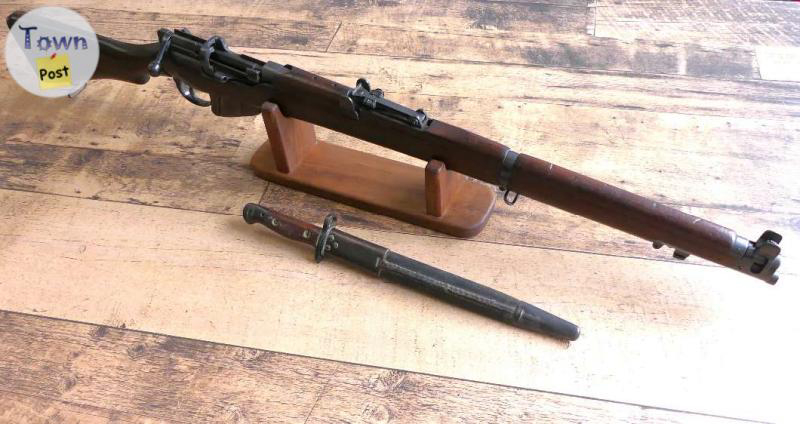
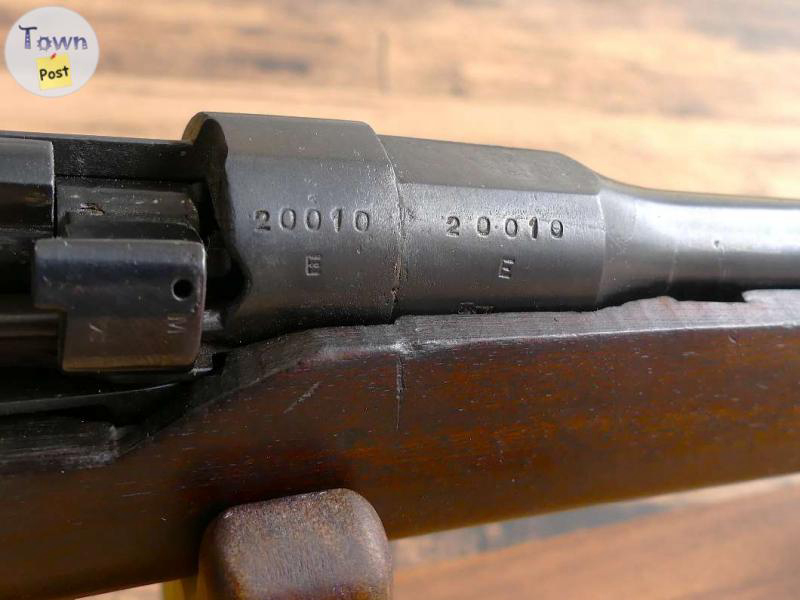
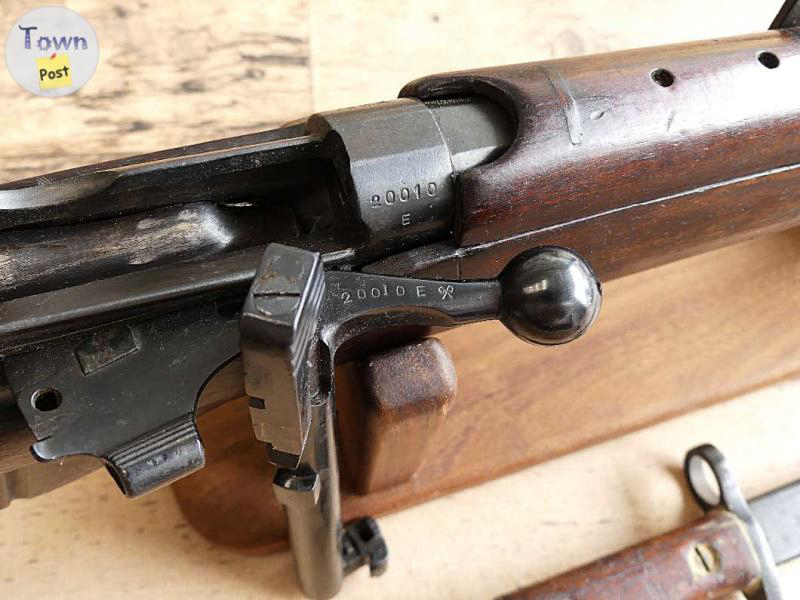
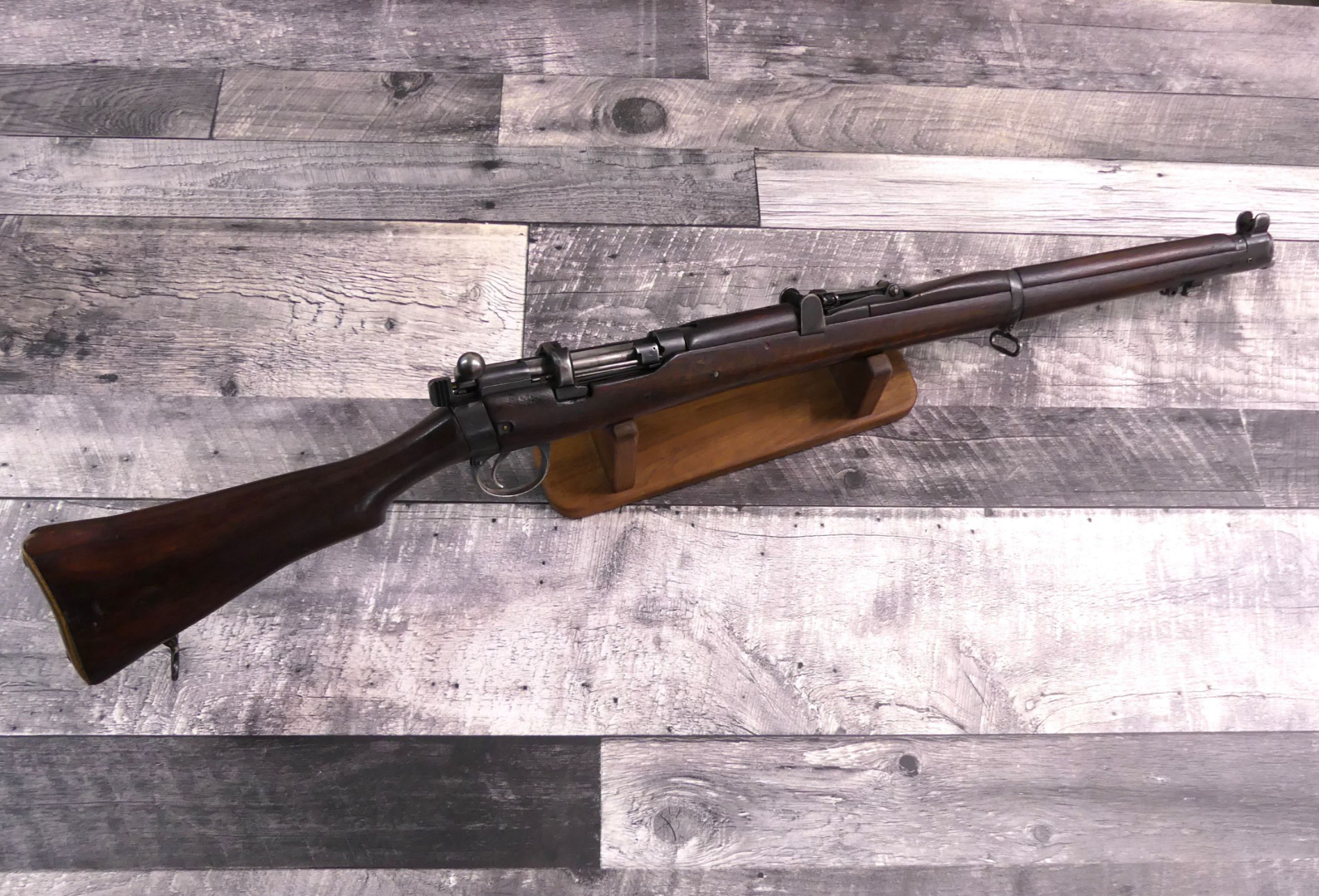
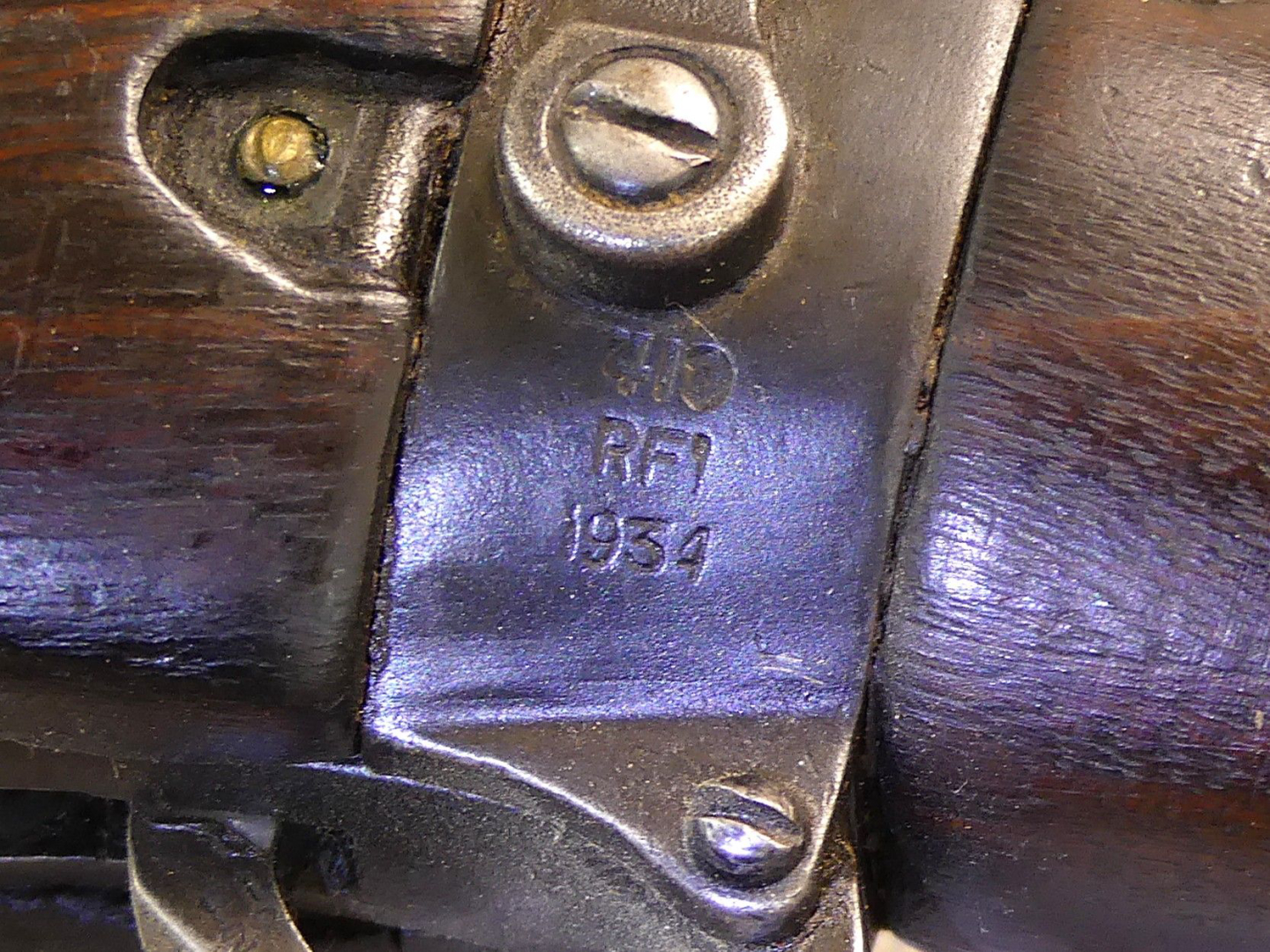
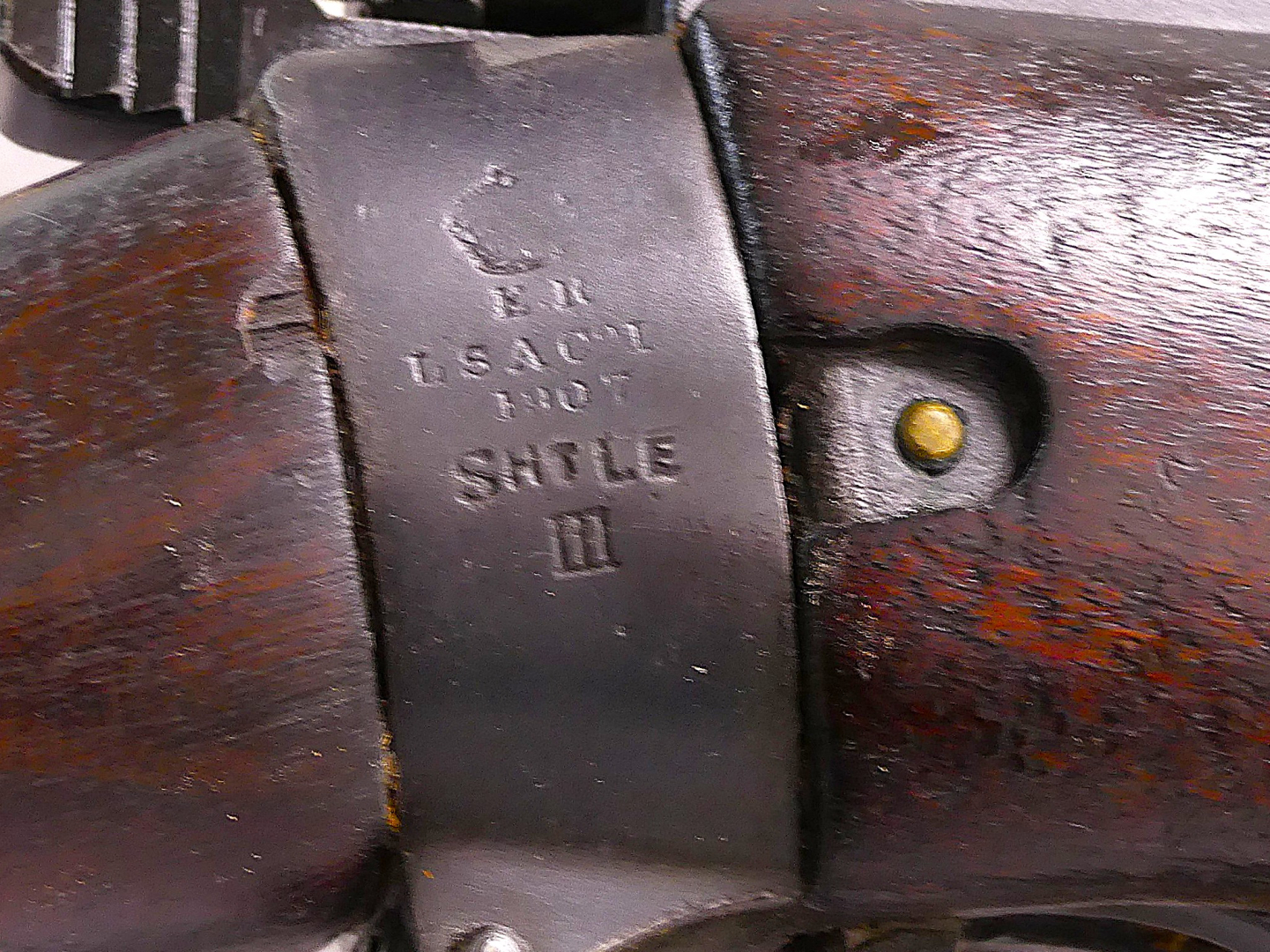
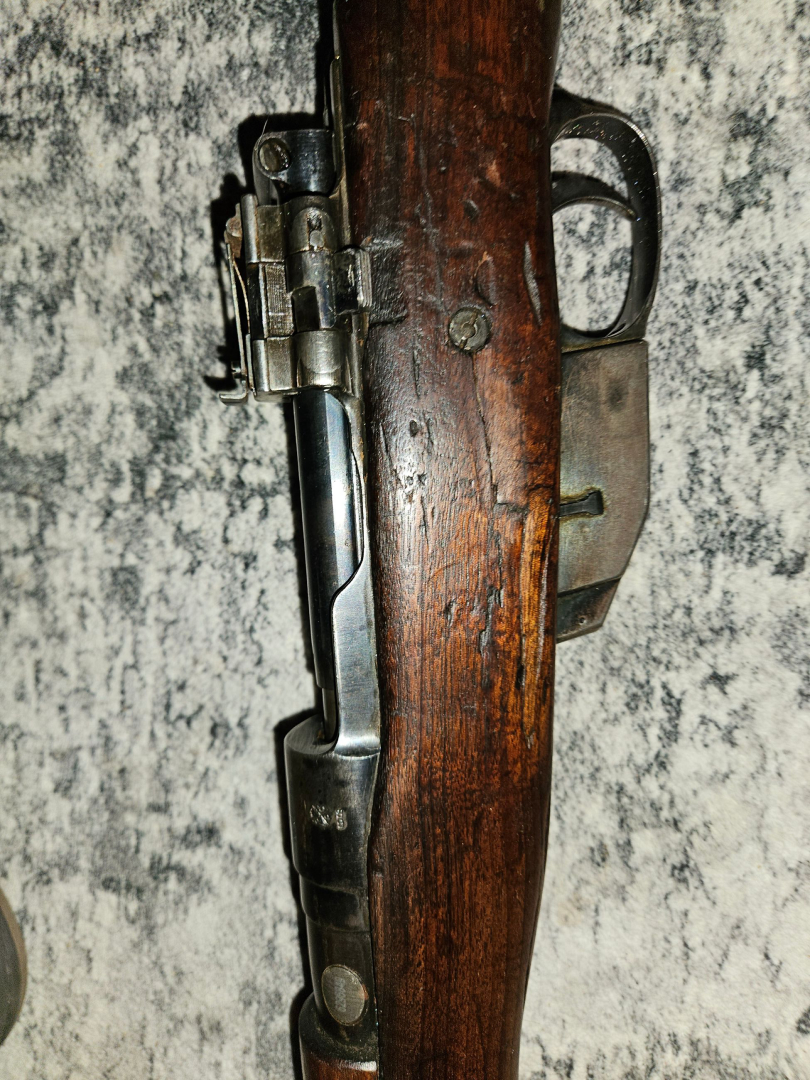
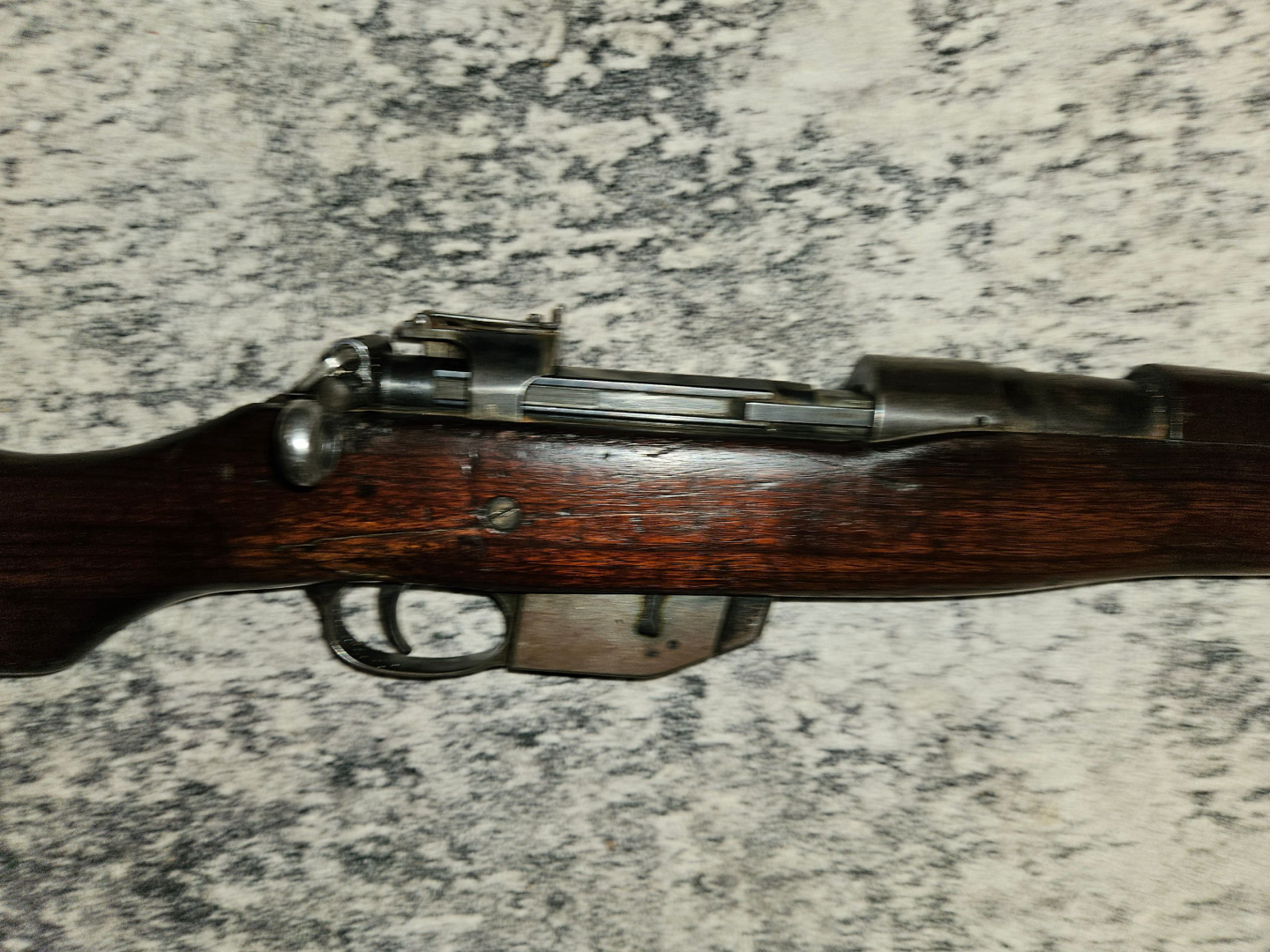
Lee Enfield No: 1 Mark III 1938 GR1 Singapore SMTLE . 303 BRITISH 10 round Mag, full wood, swivels, bayonet lug with pig sticker bayonet included, rear brass butt plate with tool kit compartment, 2000m rear adjustable iron sight. Frame and butt stock medallion match. Mag number unreadable. Length: SMLE No. 1 Mk III: 44.57 in (1,132 mm) Barrel length: SMLE No. 1 Mk III: 25.2 in (640 mm) In late 1915 the Mk III* was introduced incorporating several changes, the most prominent of which were the deletion of the magazine cut-off mechanism, which when engaged permits the feeding and extraction of single cartridges only while keeping the cartridges in the magazine in reserve, and the long-range volley sights. The windage adjustment of the rear sight was also dispensed with, and the cocking piece was changed from a round knob to a serrated slab. Rifles with some or all of these features present are found, as the changes were implemented at different times in different factories and as stocks of parts were depleted. The magazine cut-off was reinstated after the First World War ended, and not entirely dispensed with in manufacturing until 1933. The SMLE Mk III* (renamed Rifle No.1 Mk III* in 1926) saw extensive service throughout the Second World War, especially in the North African, Italian, Pacific and Burmese theatres in the hands of British and Commonwealth forces. Australia and India retained and manufactured the SMLE Mk III* as their standard rifle during the conflict, and the rifle remained in Australian military service through the Korean War, until it was replaced by the L1A1 SLR in the late 1950s.The Lithgow Small Arms Factory finally ceased production of the SMLE Mk III* in 1953.
categories:Sporting GoodsGuns
39506 impressions
1531 views
Saskatoon, SK1 day ago
Photo of SWISS SCHMIDT RUBIN 1896/ K11 INFANTRY RIFLE 7.5mm X 55mm Manufactured: 1911-1920
$1160
SWISS SCHMIDT RUBIN 1896/ K11 INFANTRY RIFLE 7.5mm X 55mm Manufactured: 1911-1920
SWISS SCHMIDT RUBIN, MODEL: 1896/11 INFANTRY RIFLE, CALIBER: 7.5 X 55 Very good original condition 1911-1920 conversion date to M191 action.. SWISS SCHMIDT RUBIN, MODEL: 1896/11 INFANTRY RIFLE, CALIBER: 7.5 X 55, COMES WITH MUZZLE COVER, BORE IS VERY GOOD. VISIBLE NUMBERS MATCH. BARLEY CORN FRONT SIGHT WITH RAMP, ADJUSTABLE U NOTCHED REAR SIGHT, SILVER BOLT WITH RED POLYMER BOLT KNOBS. TWO PIECE FULL MILITARY WOOD STOCKS, FINGER GROOVED FOREND, MILITARY MODIFIED PISTOL GRIP, SMOOTH STEEL BUTT PLATE, SLING SWIVELS, STACKING HOOK, BAYONET LUG. METAL FINISH TURNING SILVER GREY WITH LIGHT PITTING, SCRATCHES, HANDLING MARKS AND WEAR. STOCKS SHOW DINGS, MARKS AND WEAR. ACTION: STRAIGHT PULL RIFLE, BARREL LENGTH: 30.75", CLASS: CANADIAN NON RESTRICTED. The Schmidt–Rubin rifles were a series of Swiss Army service rifles in use between 1889 and 1958. They are distinguished by the straight-pull bolt action invented by Rudolf Schmidt and use Eduard Rubin's GP90 7.5×53.5 and GP11 7.5×55 Schmidt–Rubin rifle cartridge. The Schmidt–Rubin 1896/11 rifle, or the Model 96/11, was a Swiss upgrade to the 89/96 rifles they had, to use the more powerful cartridge adopted as the GP11. The GP11 cartridge operated at a higher chamber pressure, which the 89/96 action could easily handle. The model 89/96 rifles were modernized by changing the three-groove rifled barrel to a new 4-groove type, adding a pistol grip to the stock, changing the magazine to the 6-round type used in the 1900 short rifle, and modernizing the sights. This also streamlined the appearance of the rifles. Because more rifles were needed than were available, the model 1911 rifle, with slight changes, was put into production. Almost all of the 127,000-plus model 89/96 rifles were converted to the 96/11 specifications. An improvement over the original 1889 version of the Schmidt–Rubin rifle, the Swiss M1911 placed the locking lugs in the middle of the bolt, rather than at the rear, strengthening the action and allowing a more powerful cartridge, the Gewehrpatrone 11 or GP 11 to be used. It is distinguished from the 96/11 rifle by a curved butt plate and by a stock with an integral semi-pistol grip. It uses a graduated tangent sight which begins at 300 meters. The 1911 and 96/11 rifles were made with excellent craftsmanship, and were exceptionally accurate. As Switzerland remained neutral through both world wars, remaining rifles are typically in far better condition than other European rifles of the time. CFP/RCMP courtesy of Bill C-71 require any firearm to have a transfer registration number approved by the CFT to sell, give or transfer as of MAY 18, 2022. Seller needs the full name and PAL of the buyer with DOB and email as on file with the CFP. Seller then submits information on the RCMP CFP Individual Web Services which confirms the buyers PAL as valid or not with a Reference Number. Failure to do so is subject to Sections 99 & 101 of the Criminal code.
categories:Sporting GoodsGuns
30603 impressions
1320 views
Saskatoon, SK1 day ago
Photo of Smith and Wesson No. 2 "Old Model Army", Mid frame antique Revolver $2100
$2100
Smith and Wesson No. 2 "Old Model Army", Mid frame antique Revolver $2100
Please text anytime 6476871484. Fully functional antique revolver in ready to shoot condition ,very smooth action. No PAL needed. Can shoot 32rf long and short. Comes with FRT RCMP paperwork. Smith and Wesson No. 2 "Old Model Army", .32 RF Revolver This one is in very good condition. With original blue. The action is strong and accurate, and the cylinder indexes and locks properly without play. The bore of the 5-inch barrel is very good, with sharp rifling and mirror bright. The rosewood grips are very good and undamaged. They look like they may have been re-varnished once. SN 59474, very good overall. History & Background Horace Smith and Daniel Baird Wesson acquired Rollin White’s patent (1855) for the bored-through cylinder to manufacture what they originally called the No. 1 revolver in .22 rim fire. It proved to be a rather ineffective little pocket revolver but was nonetheless very popular with civilians as a personal protective weapon. In 1861, just as the civil war gained momentum, S&W decided that they needed a larger caliber revolver in order to be able to convince the buying public (many of them enlisted in the war) that their gun was a viable protective option and as a back-up gun in battle. The scaled-up design was duly named the No. 2 and was nicknamed the “Army”, as it was widely used by military personnel as a personal side arm. Smith & Wesson retained and defended the Rollin White patent aggressively throughout the civil war period, and until its expiry in 1870, and therefore the No. 2 “Army” would be the only American made cartridge revolver used during this conflict (although several “unlicensed” makers added their wares into the fray, such as Uhlinger, Pond and Moore). The model is called “Old Model” due to its frame shape – the square butt and octagonal barrel of the model 1 ½ First Issue, as compared to the bird’s head grip and round barrel of the Second Issue. There is no “New Model” Army. The "No. 2 Old Model" was a popular personal side arm of many officers in the Union forces during the American Civil War, and is also known as the "Army" model. It was first introduced in 1861, and made until about 1874. The "No. 2" refers to the frame size, "No. 1" having been the first, .22 caliber pocket revolver and the "No. 3"'s being the large-frame revolvers. The 1 1/2 was introduced after the number 2, and since it fits in between the no. 1 and no. 2, it was named the no. 1 1/2. The no. 2 was owned by such famous Americans as General George Armstrong Custer and "Wild Bill" Hickok, the marshal of Deadwood...
categories:Sporting GoodsGuns
17047 impressions
534 views
Mississauga, ON3 days ago
Showing 21 of 197 records
Location
Search within
of
Categories

Other1

Medical Equipment

Transportation options

Local Pickup187Can Deliver17Can Ship97