Email:
contact@
Town:
Ad Id:
1177286
Other Single Shot Firearms Handgun
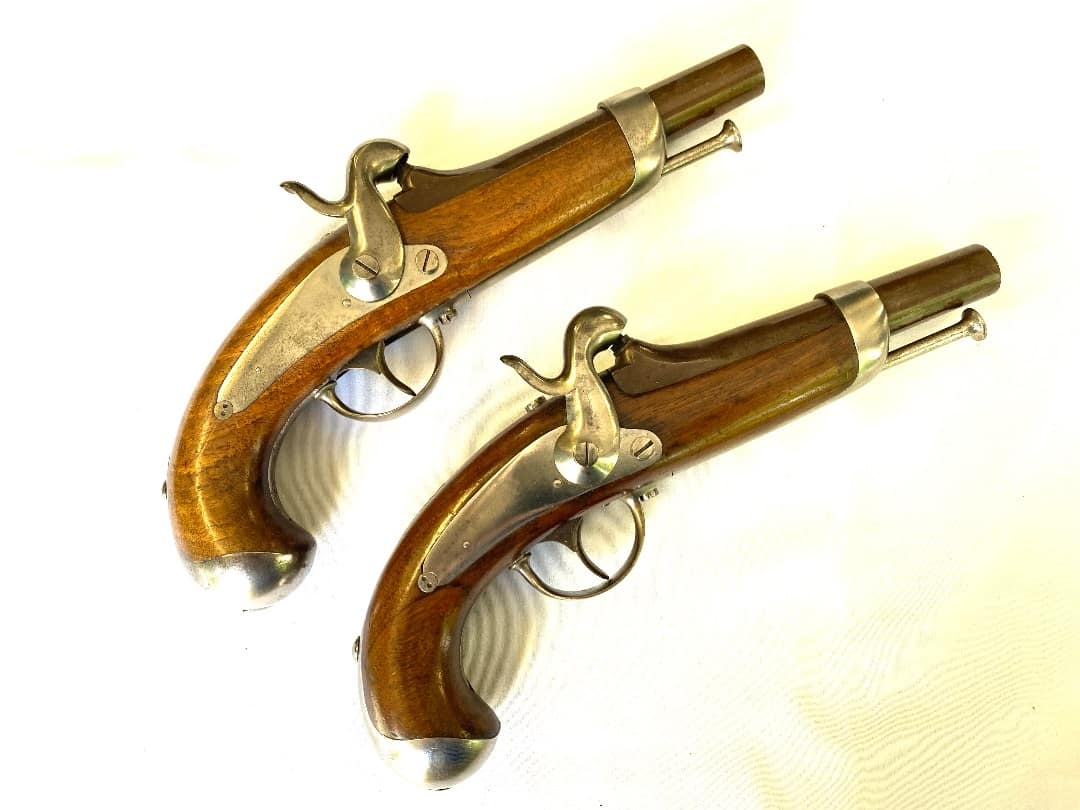
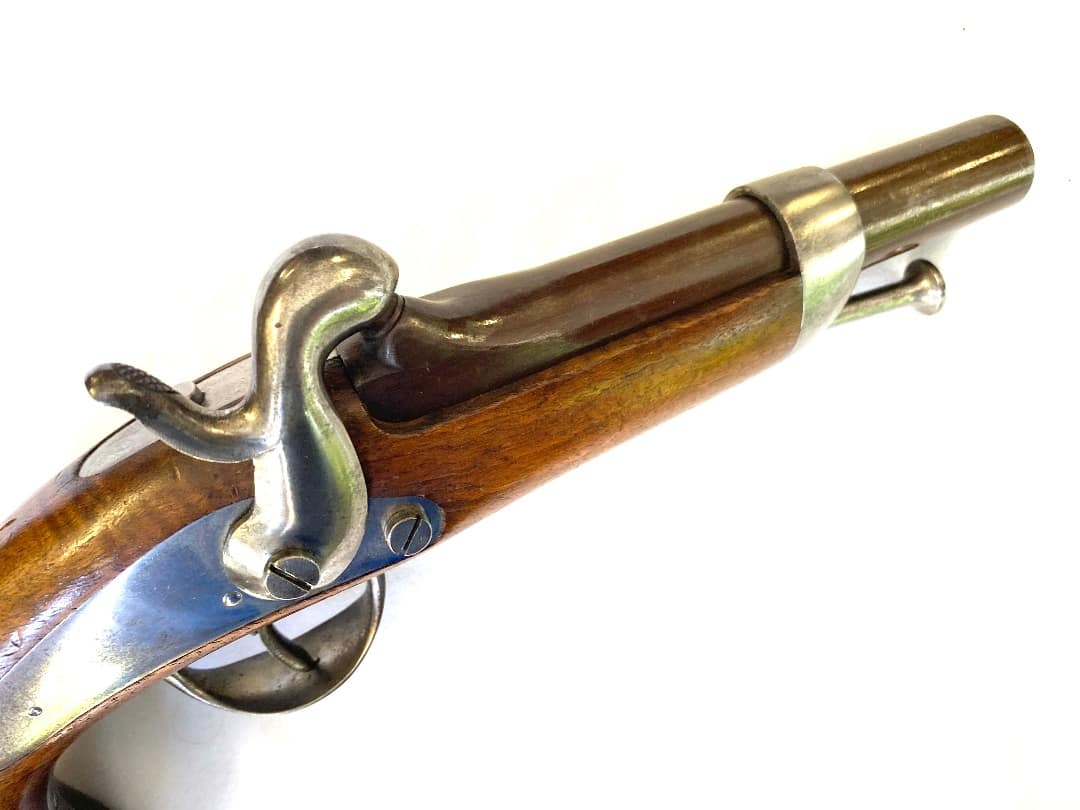
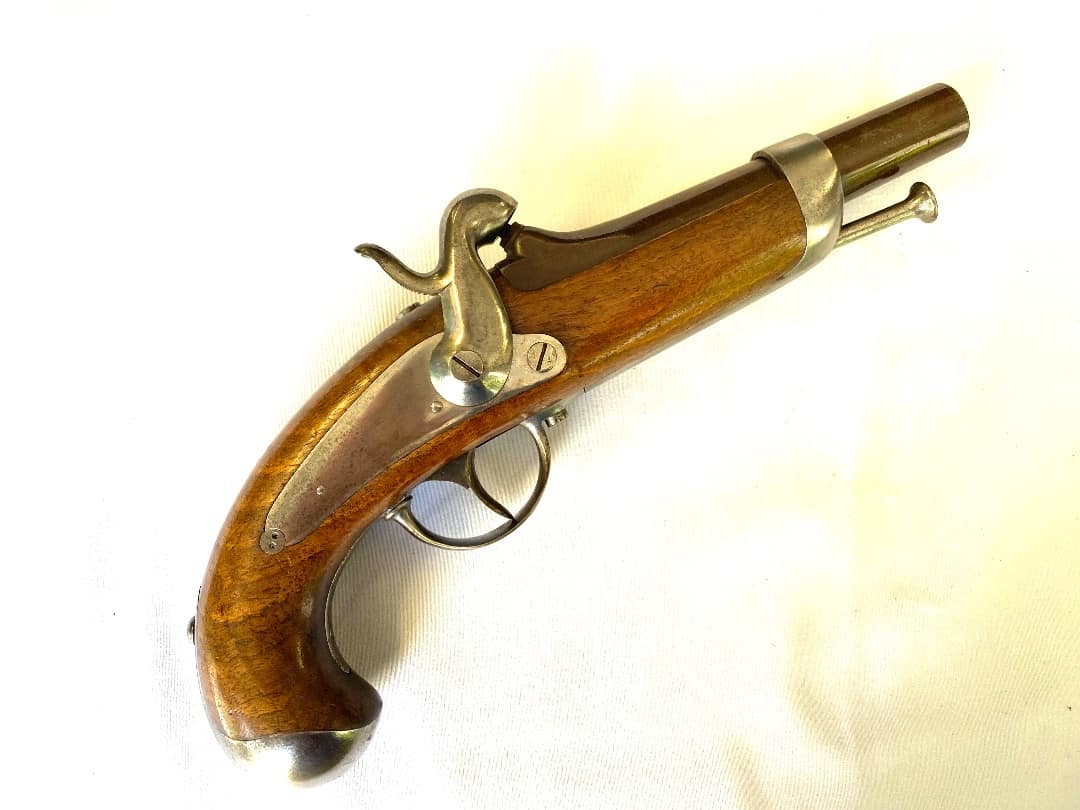
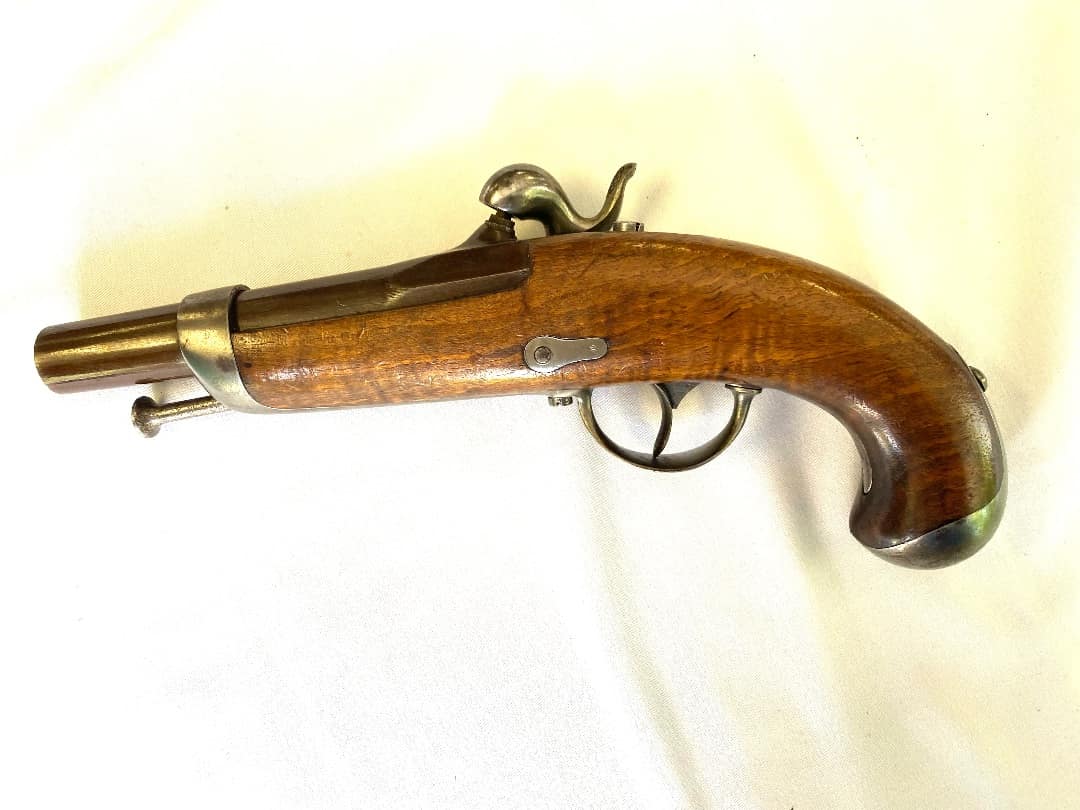
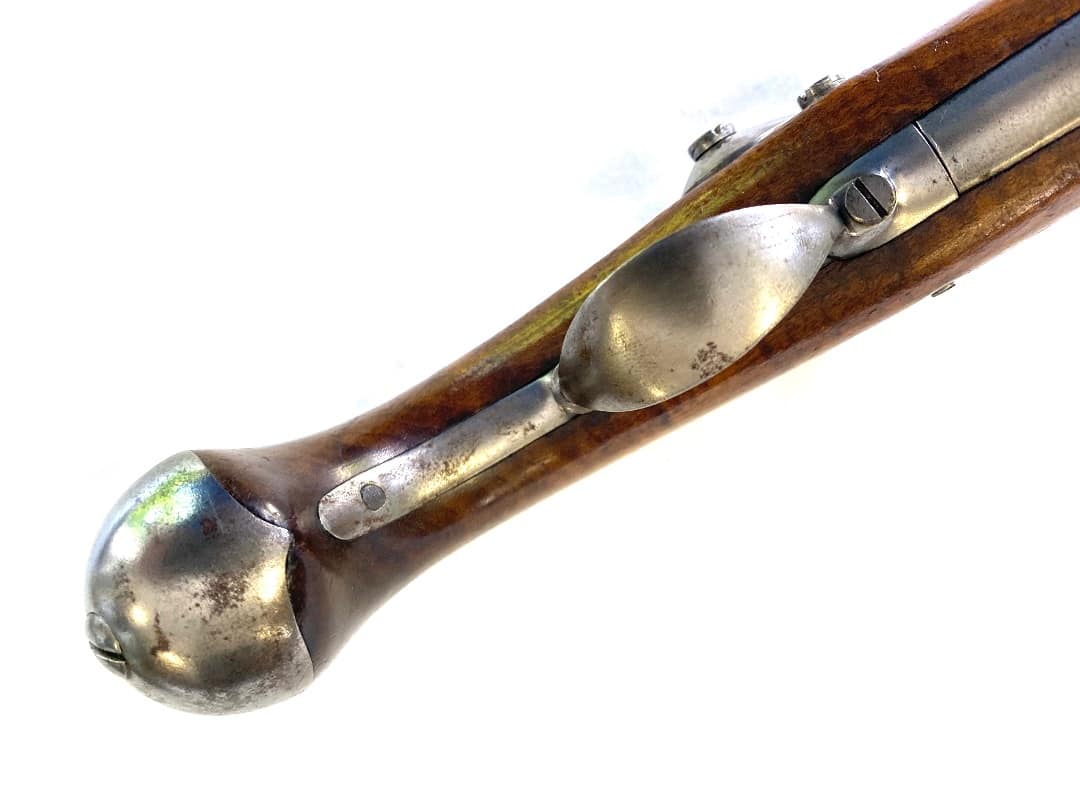
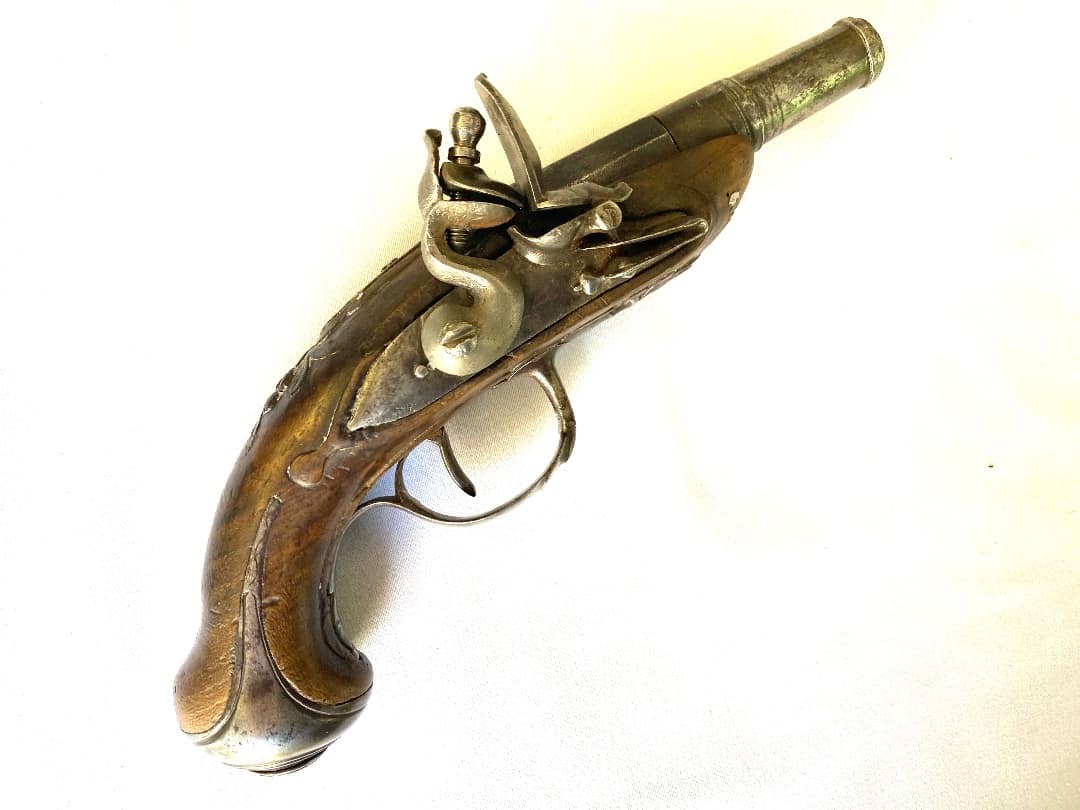
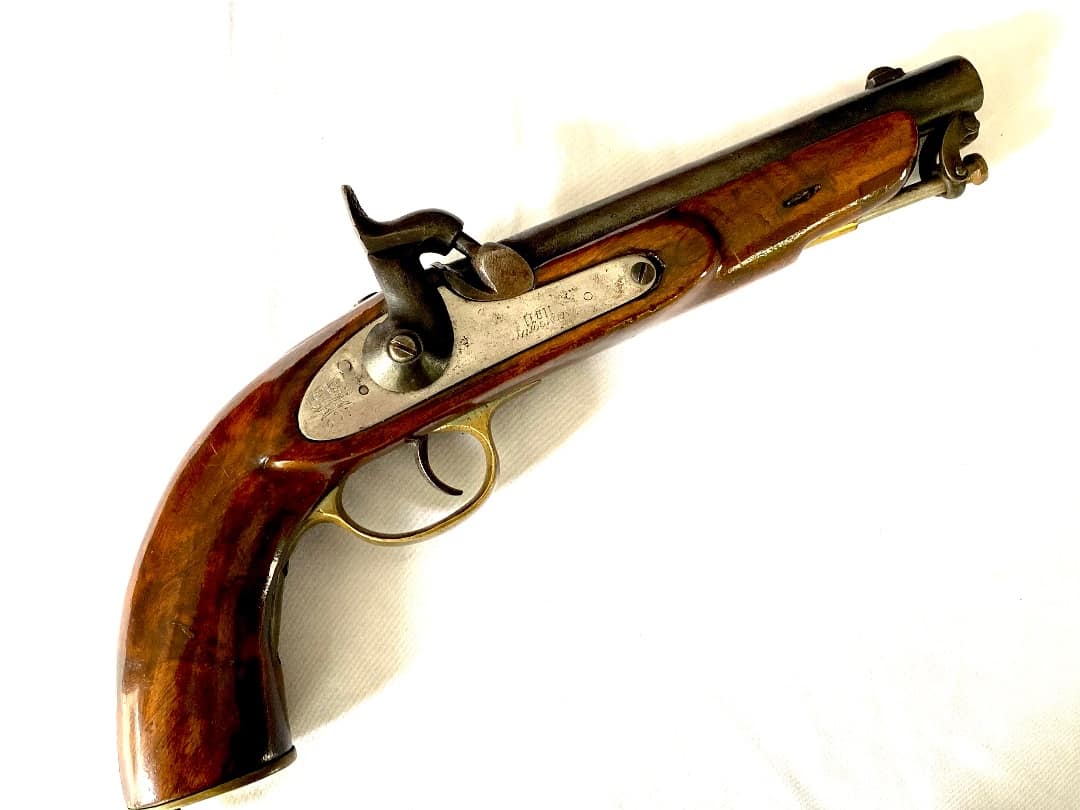
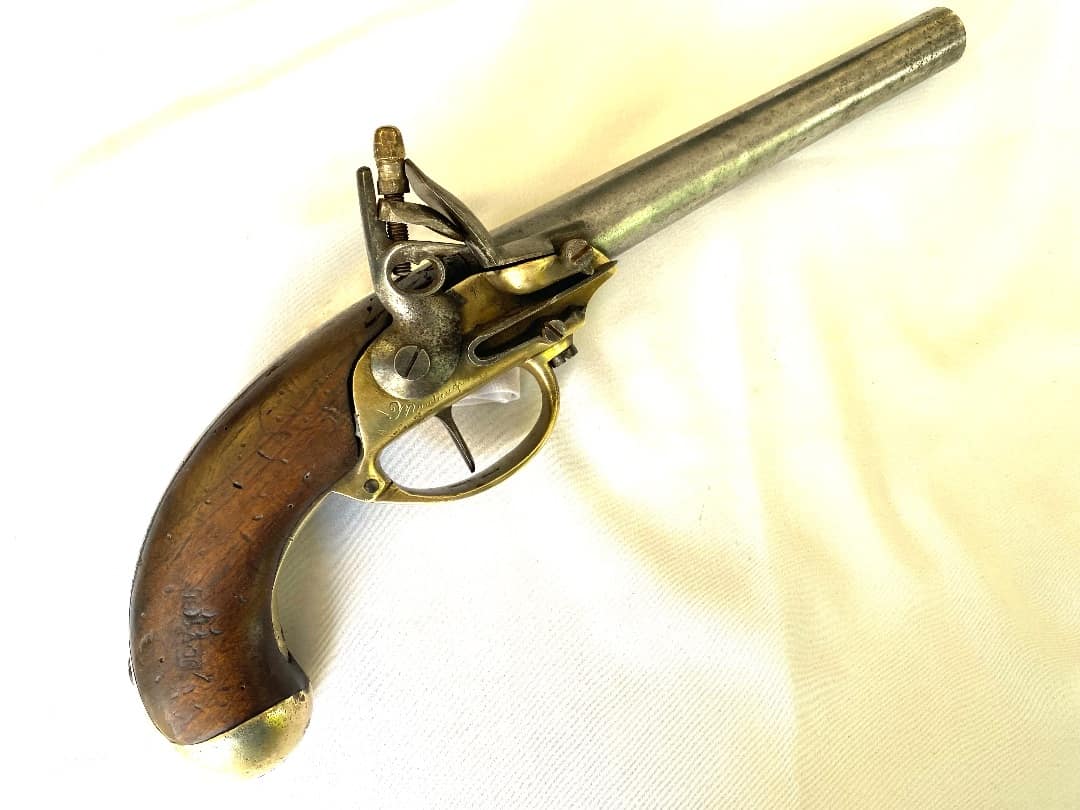
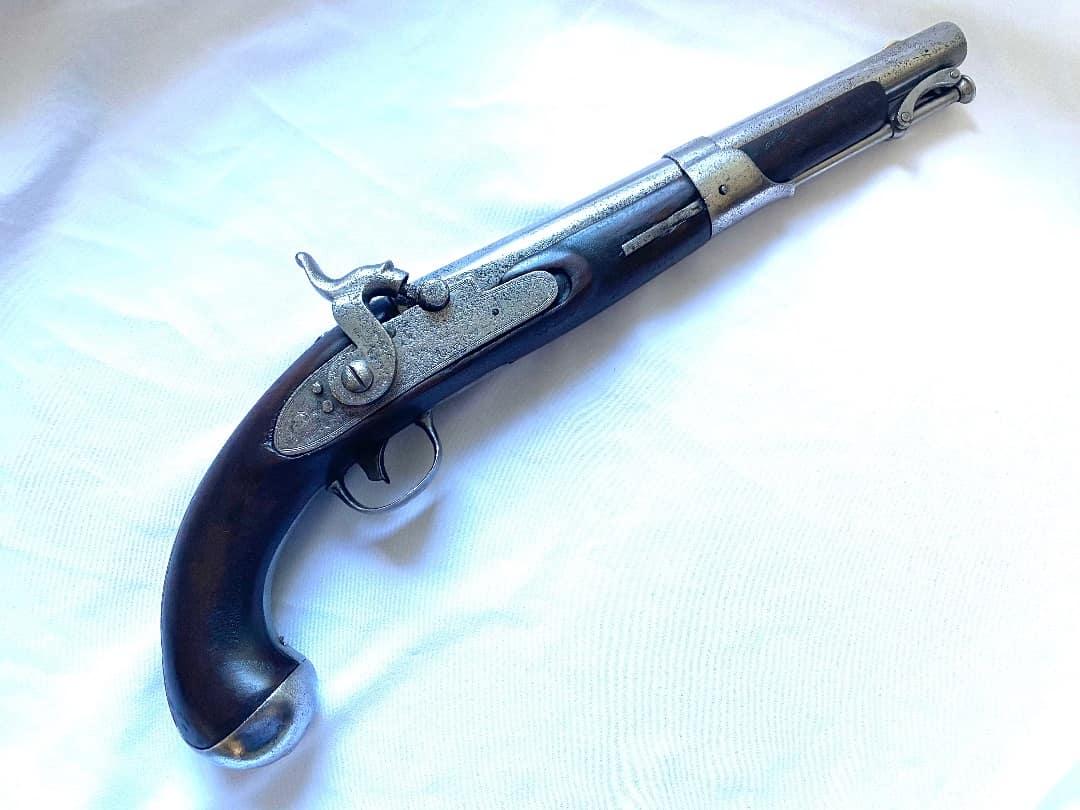
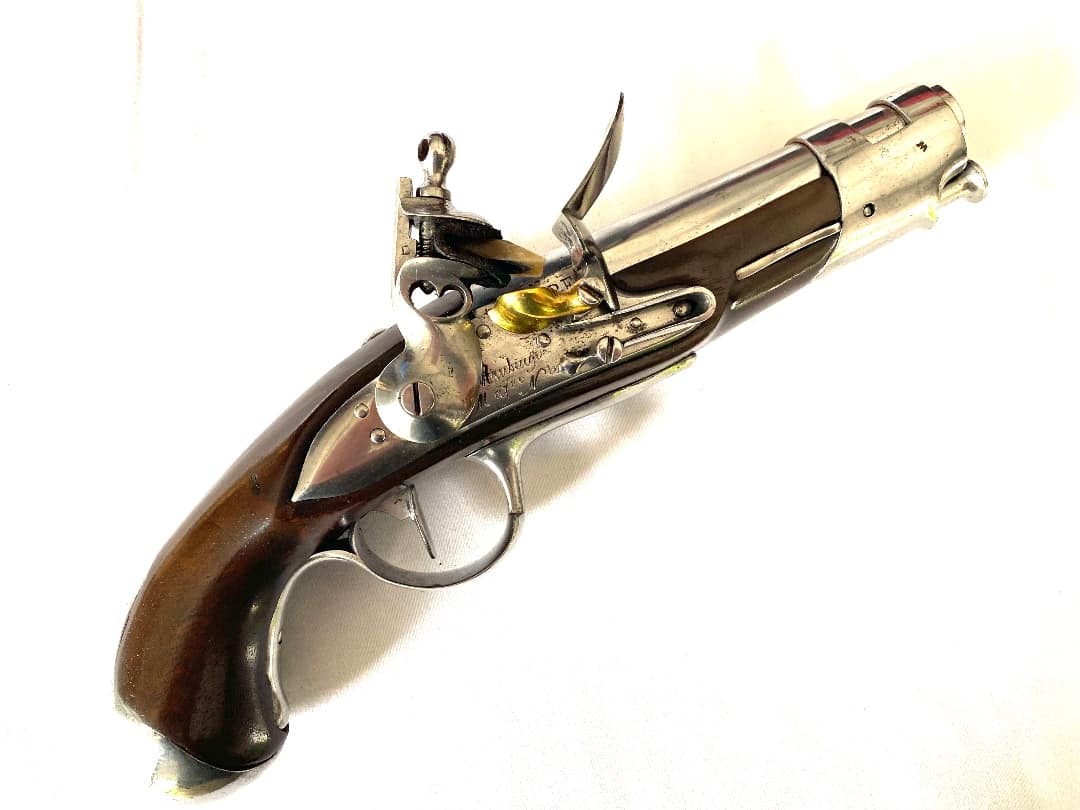
Percussion cavalry pistol (originally flintlock, later modified) • Solid walnut stock, strongly curved with metal butt cap • Short, large-caliber barrel with metal ramrod • Locking mechanism typical of French military weapons • Presence of a percussion system (hammer striking a nipple)
French cavalry pistol, model 1816/1822, converted to percussion (known as a “T”). This type of weapon is common in the evolution of French regulations: • initially manufactured with flintlock in the early 19th century • then converted to percussion around 1835–1855. Period
• Original manufacture: early 19th century (c. 1810–1825) • Conversion to percussion: mid-19th century (c. 1840)
This perfectly reflects the technological transition from flintlock to percussion, a key stage in the history of firearms. Technical description
• Type: Military handgun (cavalry) • System: Percussion (later modification) • Loading: Muzzle-loading • Estimated caliber: 18 mm (French military standard) • Materials: • Walnut stock • Steel furniture • Smoothbore barrel • Accessories: Metal cleaning rod (present)
The configuration and proportions correspond to the standard French pistols used in the Napoleonic campaigns and later under the July Monarchy and the Second Empire.
Historical context:
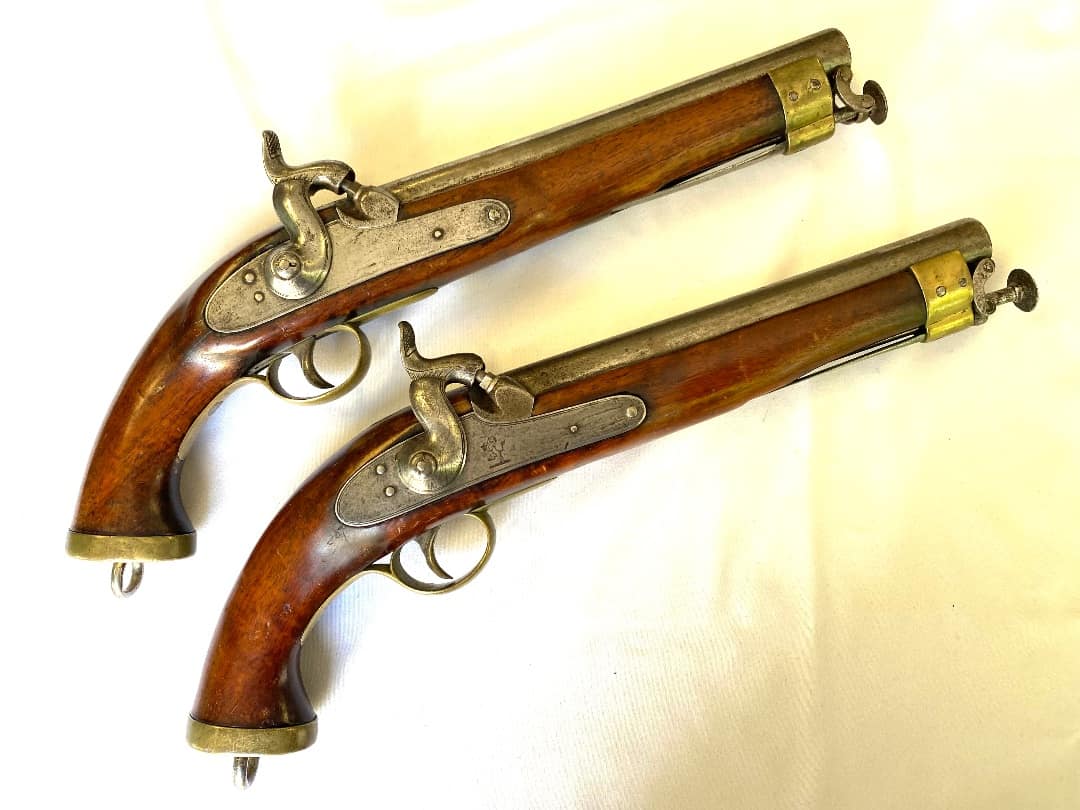
French cavalry pistols: • dominated individual military weaponry between the 18th and mid-19th centuries • were carried in pairs in saddlebags • were progressively modernized with the advent of percussion, a more reliable system than flintlock. The modified Model 1822 is emblematic of this technological transition.
Condition
• Good overall condition • Consistent patina • Markings present (proof mark visible on barrel) • Homogeneous pieces (no major anomalies visible)
Strengths:
• Representative of French military weaponry • Concrete evidence of the technical transition from flintlock to percussion caps • Ideal educational tool (evolution of firing mechanisms) • Similar weapons are present in national collections (Type Mle 1822)
Relevance to collection:
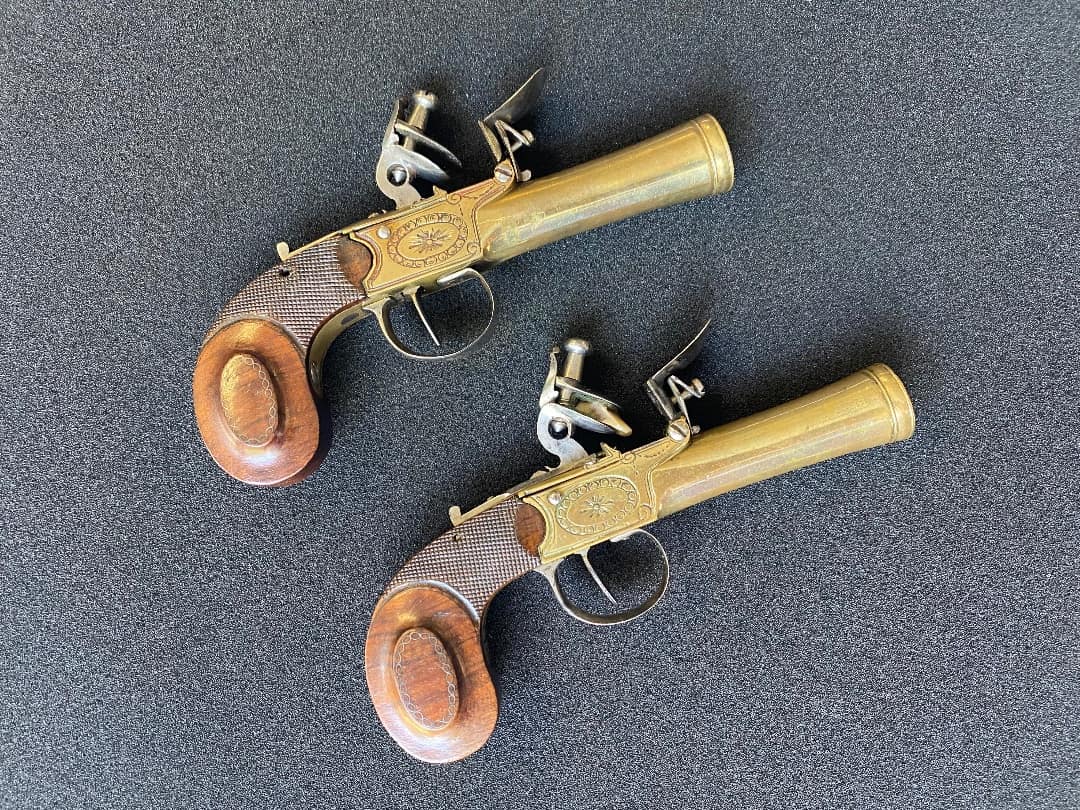
• Completes a Napoleon/19th century section • Good value for money for an institutional acquisition • Robust, visually evocative object Conclusion – Acquisition Rationale This pistol is a typical and relevant piece of French military heritage. Its conversion to percussion makes it an excellent example of the army's adaptation to 19th-century technological innovation. Cavalry pistols were historically carried in pairs in saddle holsters. • A preserved pair indicates: • greater historical integrity • less dispersal over time • Collectors and institutions strongly seek complete sets
https://www.expoantique.net/en/product-page/authentique-paire-de-pistolets-de-la-cavalerie-française-19e-siècle